
The Chronicles of Townes and Murray: Roots, Ruins, and the Birth of an Allotment Empire
Every great country love story begins with a hidden chapter, a quiet, secret place where the seeds of a dream are sown long before the real harvest begins.
April – May 2026.
Every great country love story begins with a hidden chapter, a quiet, secret place where the seeds of a dream are sown long before the real harvest begins. For us, the story of the Townes and Murray Allotment did not start with the heavy iron keys to Plot 121. It began a year prior, tucked away in the rich, rolling soils of a country village called Ruddington, born out of a quiet winter heartbreak, a deep family legacy, and a restless, wild longing for the land.
To understand how a pair of boots, a thermos of tea, and a patch of untamed wilderness came to define our lives, you have to go back to the moment the soil first called us back home.
Part I: The Healing Earth & The Legacy in the Blood
In the cold shadows of 2024, our world grew suddenly quieter. We lost Oscar, our fiercely loyal, golden-hearted Labrador, and the silence he left behind in our family home was heavy. Anyone who has ever loved a dog knows that the grief settles deep into the floorboards of a house. To soothe that quiet ache, I went out into the garden. I threw myself into the dirt, clearing borders, straight-lining edges, and forcing the chaotic world into a neat, orderly way.
By the time Mother’s Day rolled around in 2025, that grief had quietly transformed into a gentle, green curiosity. Daniel and our three beautiful children, Cole, Beau, and Seren, handed me a gift that would alter the course of our lives: a modest, crinkly plastic polytunnel and a handful of seed packets.
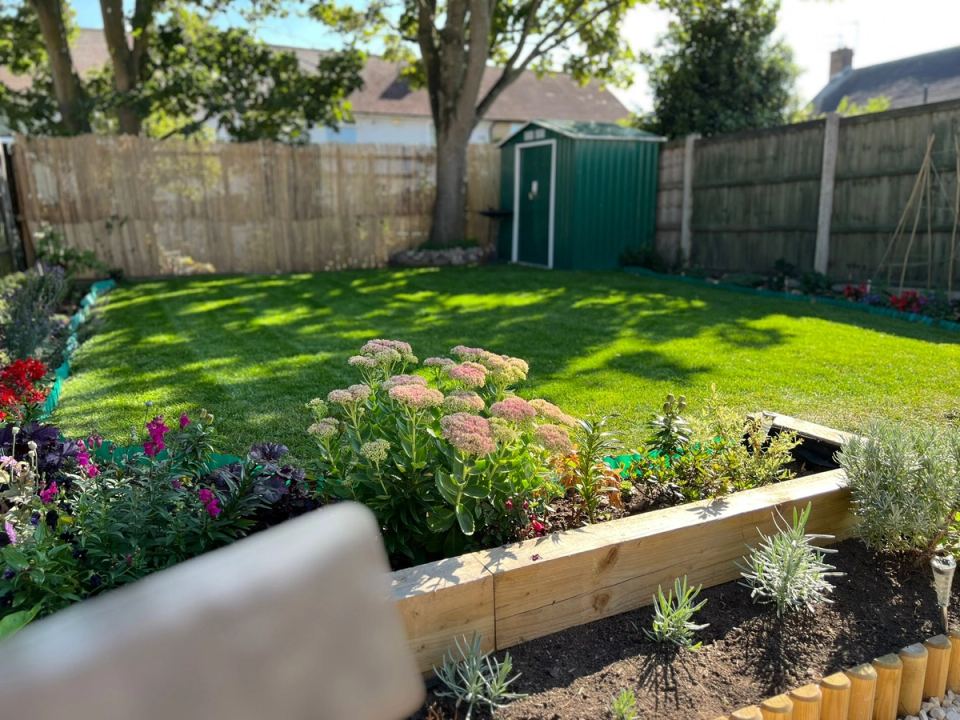
I filled our home garden with flowers of every imaginable kind. I coaxed sweet peas up bamboo canes, watched cosmos sway in the summer breeze, and found out that, by some grace of nature, I was good at it. The blooms brought immense happiness, but as the summer days grew longer, a sweet, nagging itch began to tease at my mind. I wanted more. I wanted rows of emerald greens, heavy truncheons of ruby-red rhubarb, and the earthy, sweet smell of a proper vegetable patch.
That hunger ran deep in my veins. I was raised on the stories of fresh, sun-warmed produce and dirty fingernails, brought up around the bustling market-garden wisdom of my grandads, Grandad Townes and Grandad Murray. To me, growing food wasn’t just a weekend hobby; it was a living prayer to remember them. I wanted to smell the same damp earth they did, to feel the same honest exhaustion at sunset, and to pass that grounding, rustic legacy down to my own three children.
Part II: The Ruddington Chapters & The Fading Devotion
In the late, golden sun of August 2025, Daniel put out feelers to a traditional local allotment site just outside our area, asking if there were any empty plots. Weeks bled into autumn, and the mailbox remained stubbornly empty. Refusing to let the dream wither before it had even sprouted, we turned our eyes to a country allotment company called Roots, nestled in the village of Ruddington.
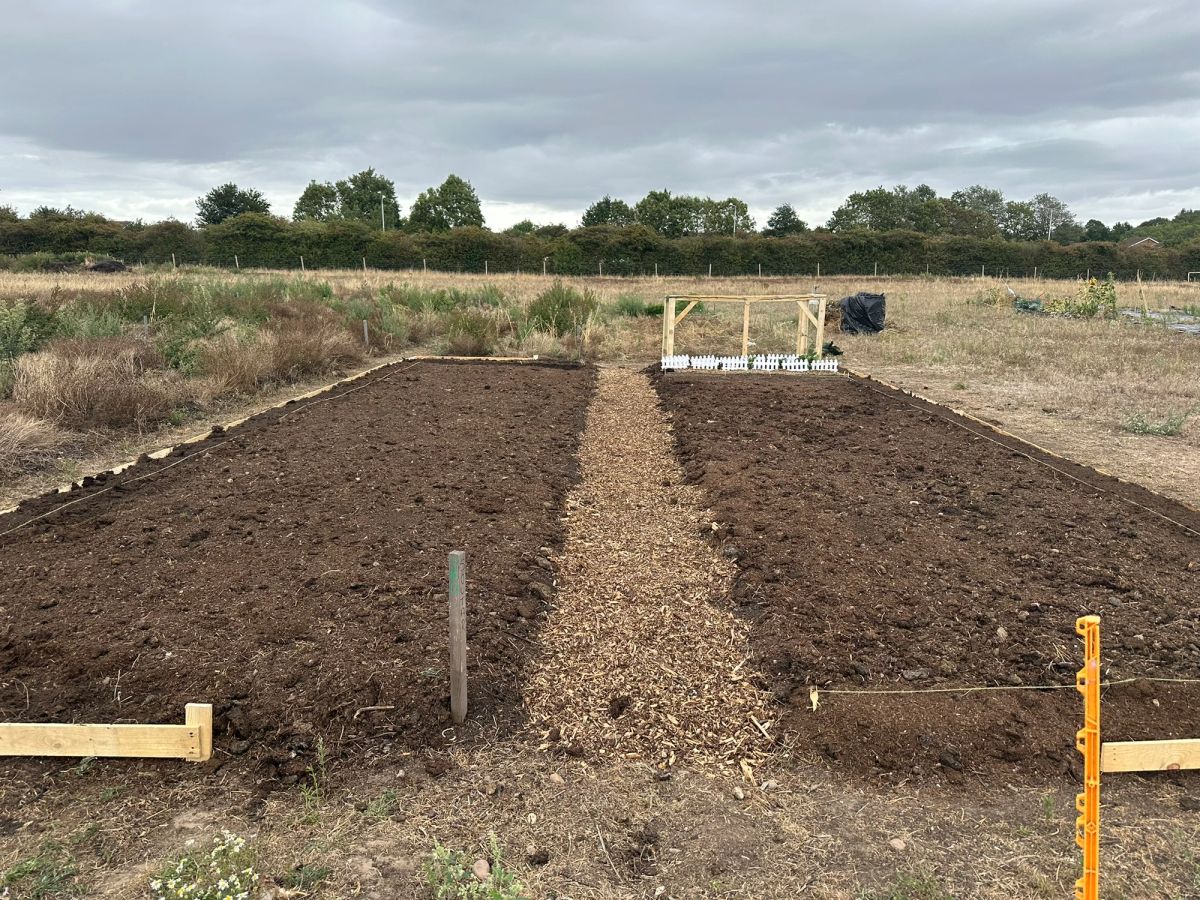
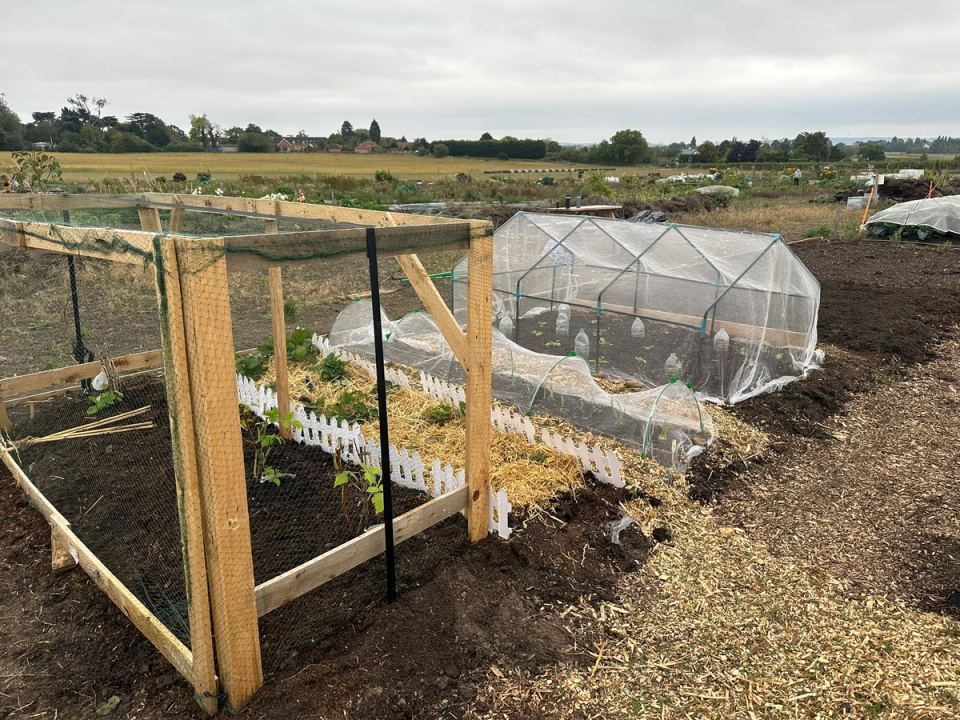
For my birthday that August, Daniel took my hand, walked me down to the Roots field, and we signed the papers. It was supposed to be a small, sensible 4x3-metre patch. But as I stood there, looking out over the open sky, a tiny patch felt like a cage for the grand ambitions swelling in my chest. We took a deep breath and went for double or nothing: two large 12x3-metre plots, sitting side by side.
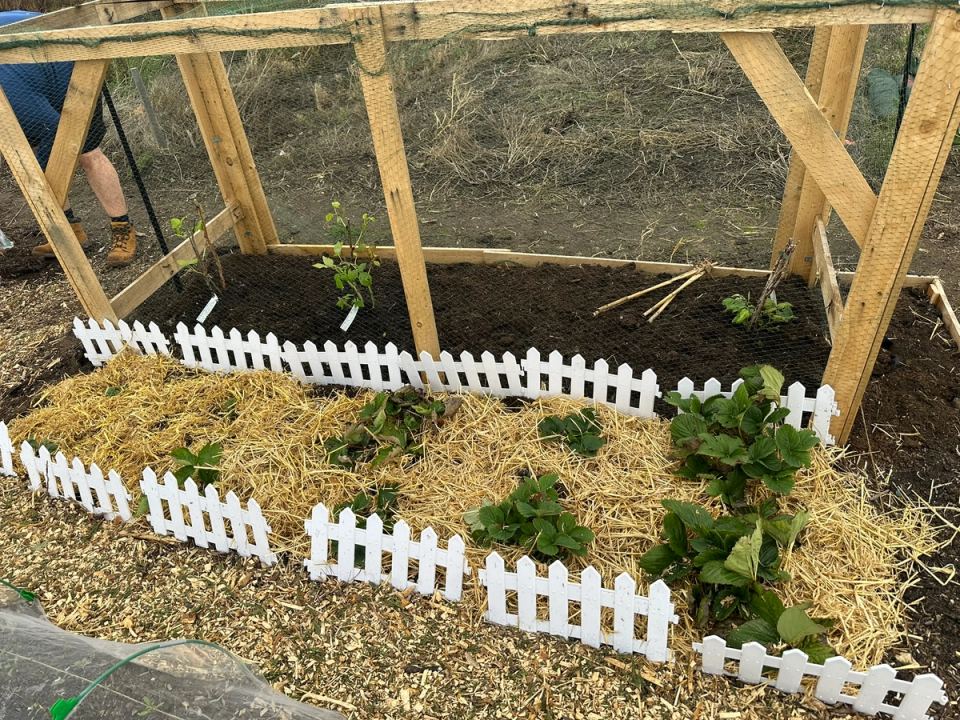
It was pure, unadulterated cottage magic. We spent that autumn and winter digging our boots into the earth, planting out blockades of cabbages, towering white cauliflowers, onions of every shape and variety, rows of sweetcorn, and sweet, sprawling beds of strawberries and raspberries. The tiny Mother’s Day polytunnel was quickly outgrown, replaced by a sturdy 4x2-metre tunnel that I meticulously tricked out with reclaimed wooden shelving, filling every square inch with seed trays, labels, and the humid, sweet scent of new life.
Life at Roots was happy, predictable, and thriving. But the wind was about to shift.
Part III: The Beacon on the Avenue
April 2026 arrived with its classic, erratic English weather—one moment throwing down sharp, cold showers, the next bathing the lanes in a pale, buttery sunshine. Out of nowhere, the telephone rang. It was the traditional allotment secretary. A plot had finally come empty on the old local site. Did we still want to see it?
We wasted no time, throwing our wellies into the boot and driving down with hearts full of romantic, cottage-garden dreams. But the moment we stepped through those historic iron gates, my romantic daydreams shattered.
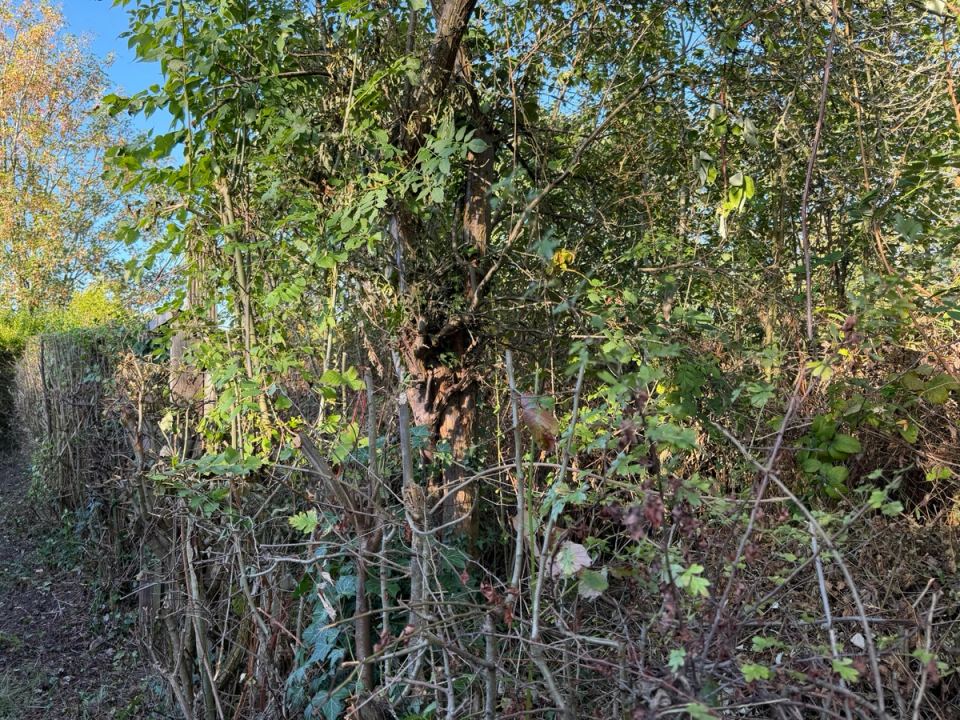
It felt like entering a forgotten, gothic wilderness. The secretary led us down a maze of paths flanked by plots that had long since been abandoned to time. Monsters of black brambles choked the walkways; wild, self-seeded elder trees cracked through old timber frames; and weeds rose twelve feet high, thick as ropes. It was deeply claustrophobic, dark, and heavy. On some plots, the undergrowth was so dense you couldn't even push the rusted metal gates open to see what lay inside.
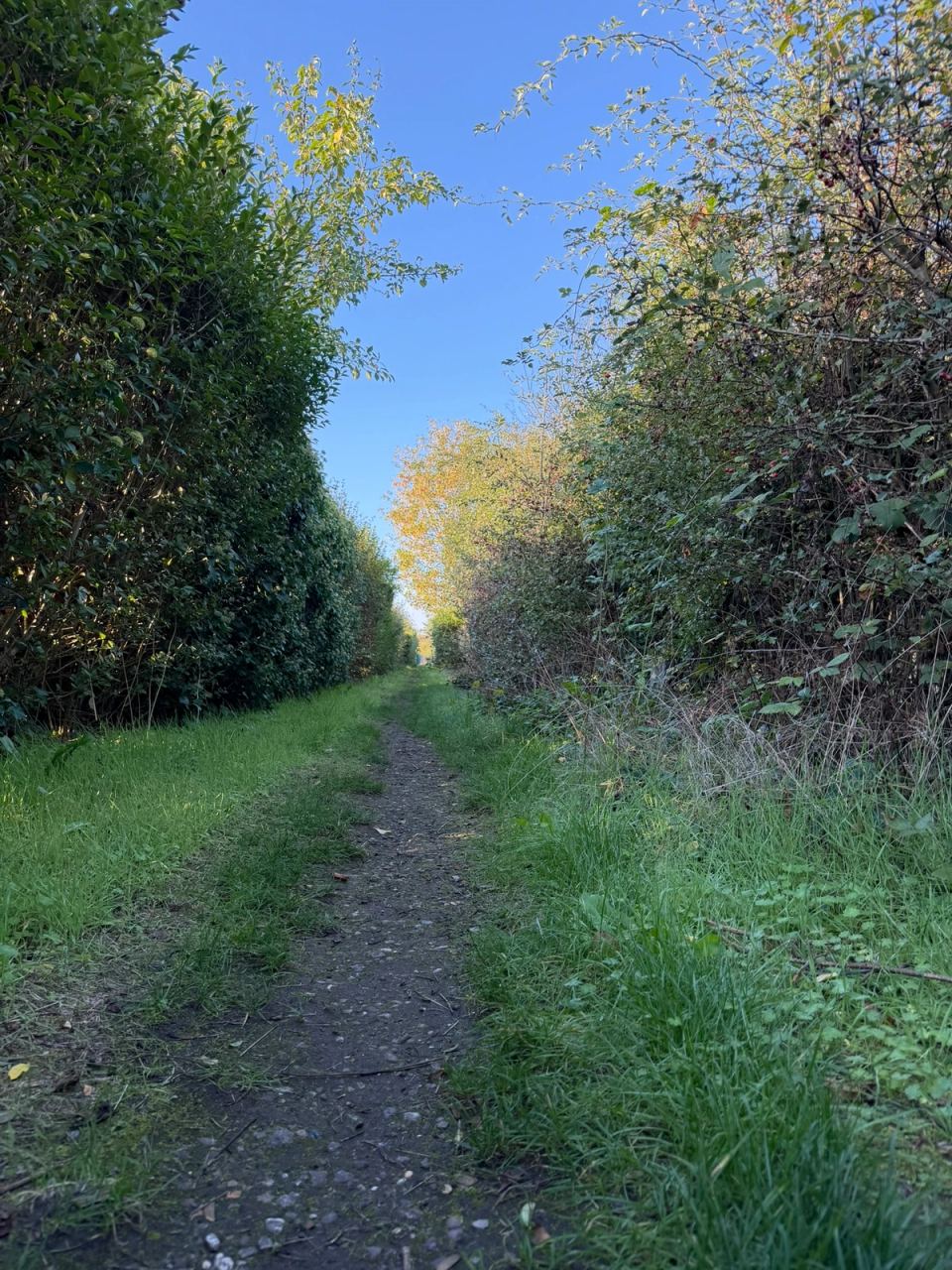
My heart collapsed into my boots. Overwhelmed by the sheer, heartbreaking neglect of the place, I looked at Daniel through the damp air and whispered that I wanted to go home. It felt like an impossible, miserable chore.
Then, we turned a corner onto the central avenue.
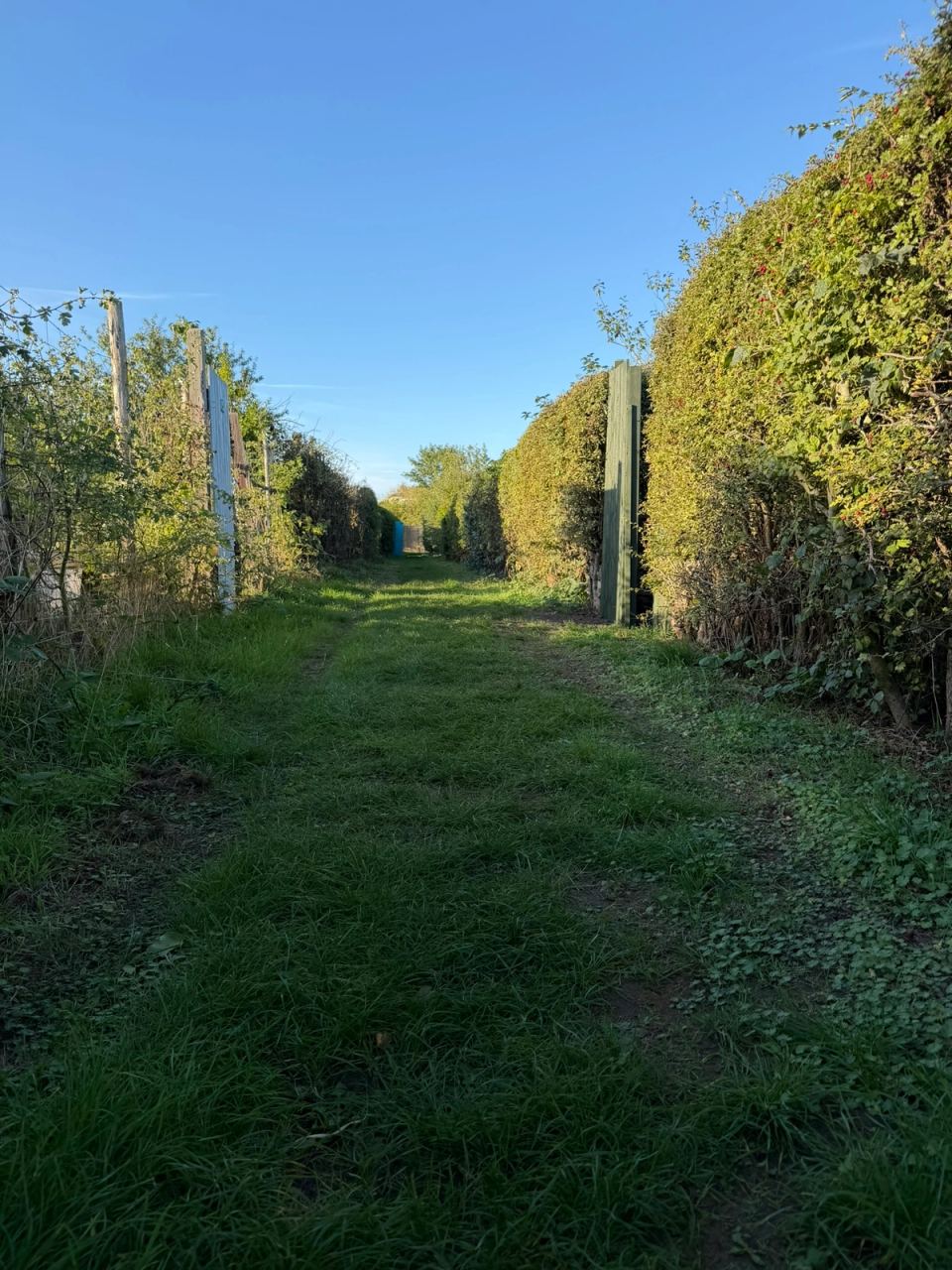
As our boots crunched down the path, the heavy, claustrophobic weight began to lift from my chest. The avenue seemed to open up, casting away the shadows. Ahead of us, a warm, golden light seemed to pool around one specific wooden latch. It was a beacon, a magnetic pull that made the hairs on my arms stand up.
Plot 121.
The gate was weathered, silvered by decades of rain, but perfectly sturdy. Unlike the suffocating jungles we had just passed, 121 was flooded with open, country light. The energy humming off that soil was electric—an invisible anchor pulling me straight through the latch.
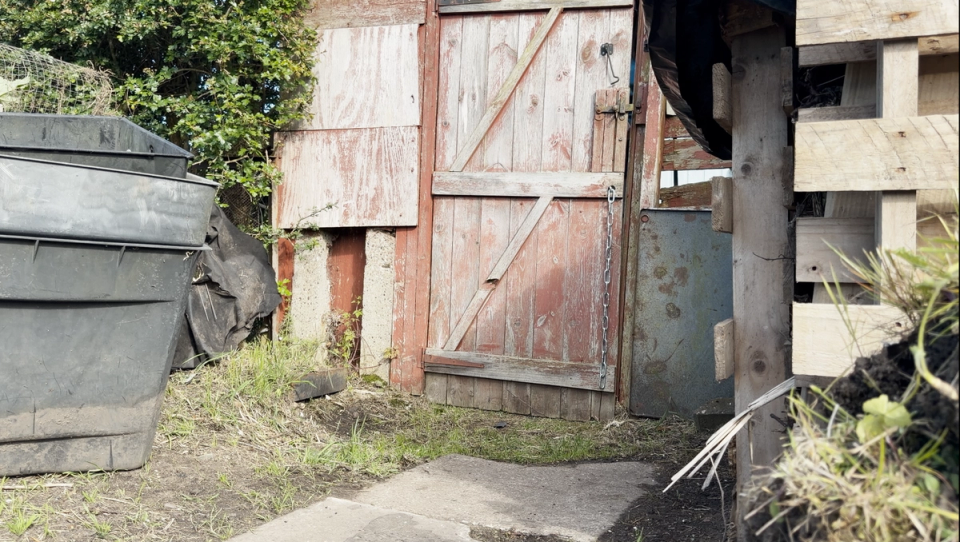
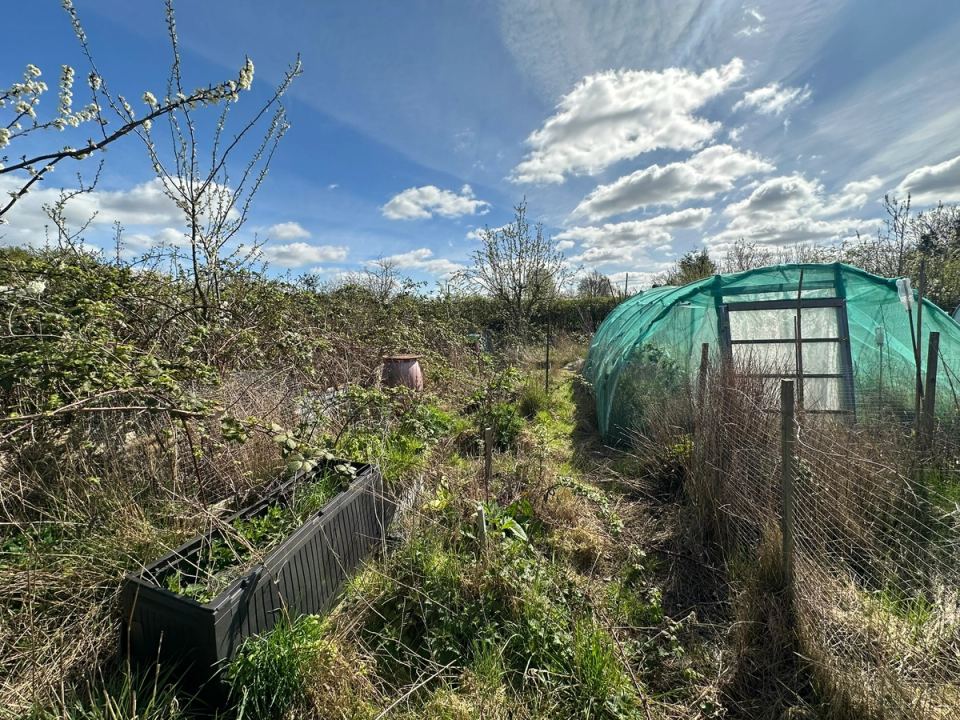
When we pushed the gate open, we didn't see a mess of weeds. We saw a beautifully segmented, historic cottage homestead waiting to be awakened. There it stood: an ancient Orangery built of uneven, mossy red bricks with a gorgeous, rusted old iron log burner tucked inside. There were two large greenhouses constructed entirely from beautiful reclaimed glass windows and old cottage doors, with a sheltered "Homestead" space nestled between them—the ultimate spot for a steaming mug of tea on a frosty morning. We saw a giant, handmade Brassic Cage crafted from old heating pipes and scaffolding netting, a working polytunnel, and a quaint little shack serving as a cold frame.
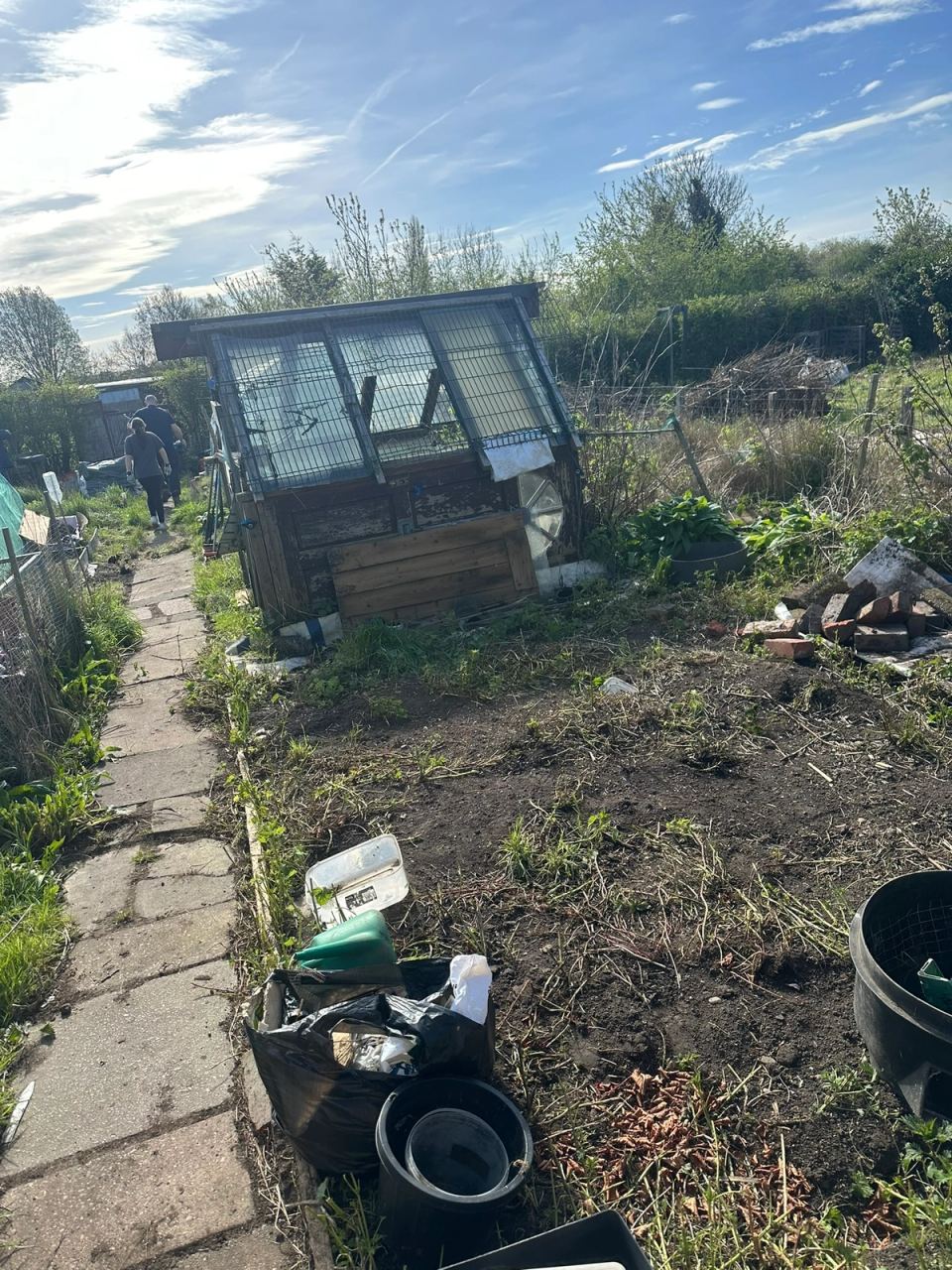
The plot was a patchwork quilt of secret garden rooms. I turned to Daniel, my eyes welling up, and knew I was looking at the missing piece of my soul. I was home. I felt entirely whole.
We tried to beg for the keys that very afternoon, but the allotment rules were strict. We had to endure an agonising wait until Thursday. When the day finally arrived, we eagerly slid a £25 key deposit across the table. The cold iron keys dropped into my palm, and the empire of Plot 121 was officially ours. We immediately ran to the plot, cameras swinging from our necks, documenting every inch of the wilderness, recording the "before" videos, and planning our new kingdom.
Part IV: The Secret Battle & The Double-Down Rebellion
What our early viewers and followers didn't see on the cameras was the gruelling, double life we had to lead during those first few weeks of May. We hadn’t just abandoned Ruddington; we couldn't. We kept the Roots plots going, trying desperately to tend to the cabbages, strawberries, and onions we had poured our winter into.
But the magic had vanished from that village field. Every time we stood at Roots, our hearts were a mile away, wandering through the brick ruins of the Orangery or sitting in the glass-pane shelter of 121. Spending time at Roots began to feel like an obligation, a chore that didn't feel right anymore. We found ourselves spending less and less time there, speeding through the watering just so we could race back to our true home in the wilderness.
Then came May 3rd—our very first official allotment rent day. I walked into the site shed with a pocket full of cash and a burning secret in the back of my mind. Plot 121 was 400 square yards of pure paradise, but as I had spent the last few weeks mapping it out, a wild, insatiable voice inside me whispered that it still wasn’t enough. I wanted more land. I wanted an empire.
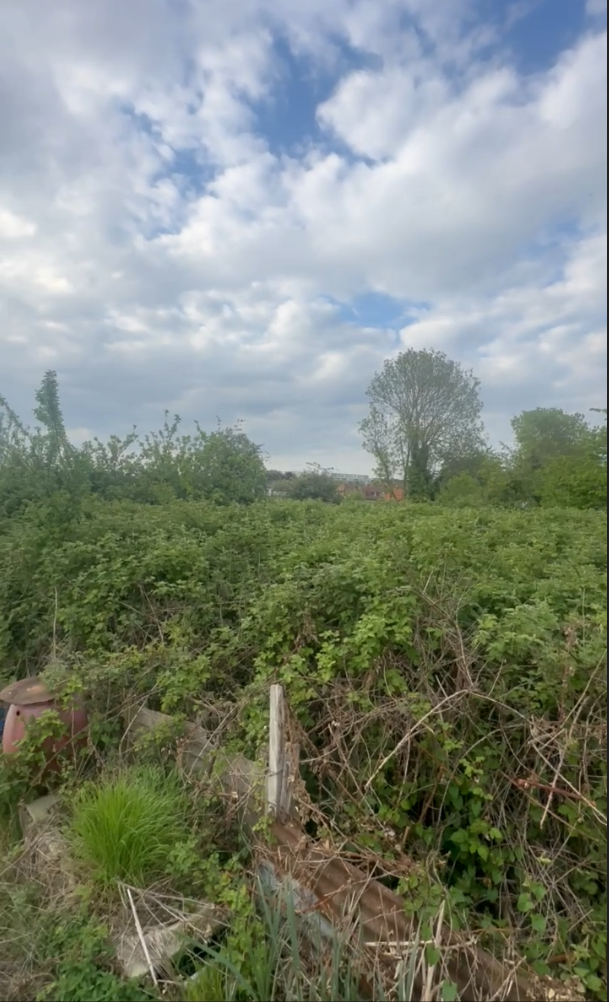
Right next door to us lay Plot 122. It was an absolute horror show—400 square yards of solid, impenetrable, twelve-foot-high brambles that knit together like barbed wire. We had jokingly dubbed it "The Bramble Plot." Daniel and I had spoken about it in passing, but he had practical, sane boundaries. I did not.
When it was my turn to pay the rent for 121, I reached deep into my purse, pulled out double the amount of cash, and looked the secretary dead in the eye. "I’m taking number 122 next door as well."
I walked back down the dirt path to where Daniel was working, my heart thumping against my ribs. I took a breath and said, "Wow, that just cost me £114."
Daniel stopped dead, his spade hovering in mid-air. His face went pale. "£114?! For one plot?!"
I gave him a small, wicked cottage-garden grin. "No. I just bought the bramble plot next door too."
I think the birds flew out of the raspberry bushes at the sound of his reaction. He was absolutely furious, muttering about sanity, time, and the sheer madness of taking on 800 square yards of total wilderness. But as I looked at him, I didn't care one bit. I was deeply, hopelessly in love with this old allotment site, and I wanted the space to grow something magnificent.
Part V: Blood, Sweat, and DNA
And so, the real battle began. We threw ourselves into clearing 121 and the newly acquired beast of 122, working with a frantic, joyful desperation. It was a regime of pure blood, sweat, and tears.
Those twelve-foot brambles on Plot 122 did not go quietly. They fought back with wicked, woody talons that tore through heavy canvas trousers and sliced right through leather gardening gloves. There were days we left the plot looking like we had been in a cage match with a wildcat, our forearms covered in matching crimson scratches, our backs aching from the relentless leverage of the mattock. Every single root ball we wrenched from the earth felt like a physical negotiation with Mother Nature herself.
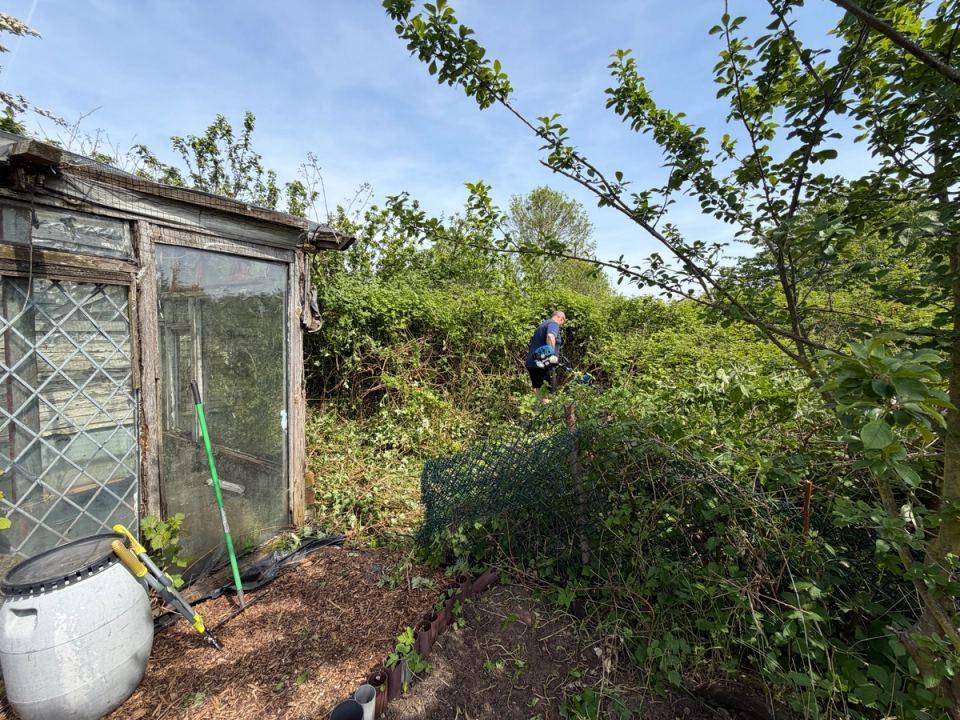
We bled for these plots. Our sweat has watered the soil beneath the old pear trees, and our tears of sheer exhaustion have dropped onto the uneven bricks of the Orangery. But every scratch was a badge of honour. With every trailer load of rubbish hauled away, and every thick, ancient bramble root burned in the fire, the beautiful, rustic cottage garden of our dreams edges one step closer to reality.
The wilderness is vast, and the work is relentless, but slow and steady wins the race. We have the keys, we have the land, and we have enough fire in our bellies to tame the wildest jungle in the county.