
The Great Tetris Game of Plot Layout and Reclaiming the Dream
This one's from the soul, so grab yourself a cuppa and settle down.
Planning a piece of land is far more than just scribbling squares on a piece of grid paper or moving strings in the dirt. It takes serious, soul-searching consideration. You find yourself standing at the wooden gate, staring out into the open space, asking the same questions over and over: What goes where? Will that actually work? How will the plot flow? And, most importantly, how do you want it to feel when you truly cross the threshold?
An allotment isn't just a food factory; it is a living entity that changes with every season, every mistake, and every sudden brainwave. Our journey across Plot 121 and 122 has been a masterclass in this exact evolution. It has been a beautiful, sometimes chaotic dance between the rigid laws of the land and the untamable, whimsical visions inside our heads.
Plot 121: Inheriting the Footprint
When we first took on Plot 121, we didn't have a blank canvas to work with. The land was already deeply established, anchored by its whimsical, historic brick structures like the Orangery and the twin glass greenhouses. We knew straight away that we didn't want to start altering or tearing down that pre-existing architectural charm. So, we looked at the remaining space, rolled up our sleeves, and just went for it.
Does the current layout work? Yes, beautifully. Is it completely right? No, probably not. Have we made changes along the way? Absolutely. And further adjustments are definitely on the horizon.
THE PLOT 121 REALM
- Core Focus: Structural preservation and fruit cultivation.
- The Sanctuary: Our young cottage orchard.
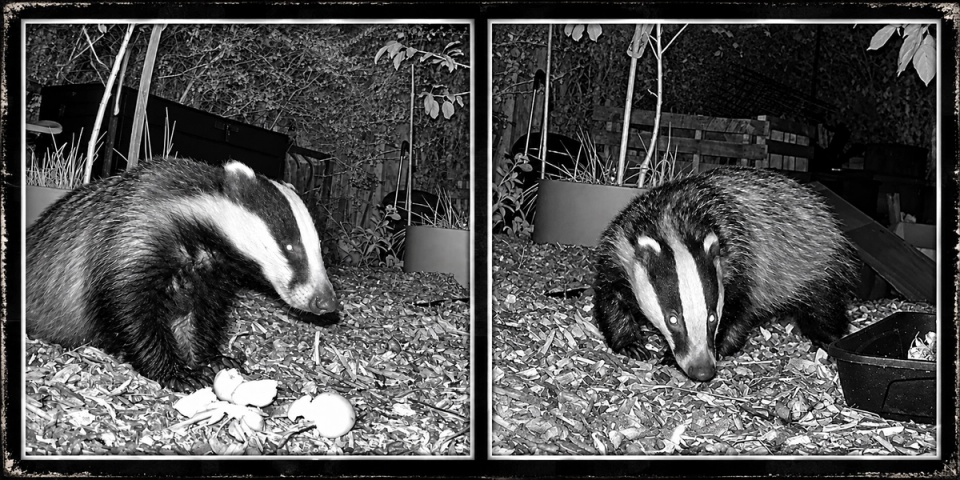
- The Subterranean Tenants: The permanent homestead of Bodger and Humbug, our resident midnight badgers. This orchard belongs to them now.
Our favourite evolution on this first plot was the addition of our cottage orchard. Over the last year, it has grown into something far grander than just a collection of young fruit trees. It has become the official nighttime kingdom for Bodger and Humbug, our resident allotment badgers. This corner of the earth is firmly their home now, a wild, protected sanctuary where they can roam under the starry Nottingham skies while we watch their antics on the trailcams from the comfort of the Homestead basecamp.
Plot 122: The Heartbreak and the 70% Law
If Plot 121 was a puzzle of fitting into an existing space, Plot 122 was a total blank canvas. When we finally cleared away that massive, tangled 12-foot jungle of wild brambles, a sprawling kingdom of open clay lay before us.
In my head, the vision was instant, romantic, and completely vivid: I wanted to build a breathtaking, traditional Victorian walled garden to grow flowers specifically for our Townes & Murray handmade seed paper project. I could see it perfectly, a mystical, fragrant paradise bursting with dense rows of vibrant orange marigolds, nodding cosmos, and bright calendula.
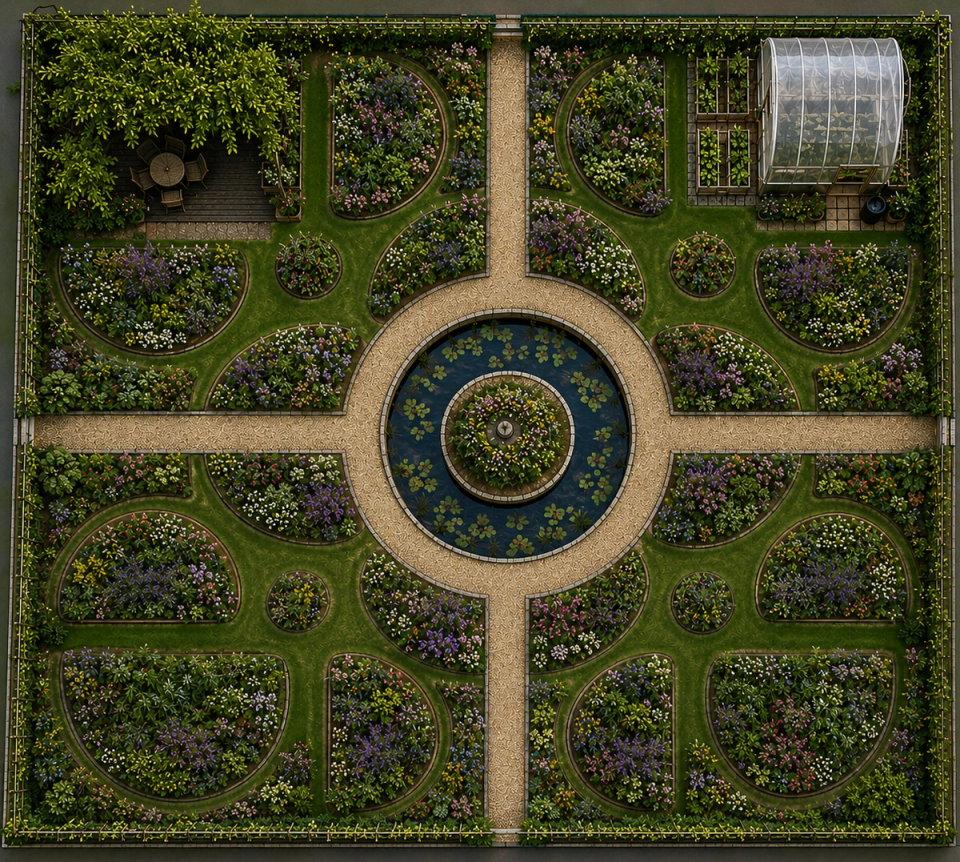
There would be exploding patches of cottage poppies, towering sunflowers, and sweet peas gracefully trailing from overhanging rustic arch trellises. It was designed to be a beautiful, sacred space completely filled with nature and old-world magic. A fairy-tale escape so far removed from the noise of the outside world that the moment you stepped inside, you forgot exactly where you were.
But allotment reality has a sharp way of waking you up from a dream.
THE ALLOTMENT STATUTE
- The Rule: A strict, legally binding requirement that at least70% of the allotment plot footprint must be dedicated to edible crops.
When that rule hit us, it was genuinely heartbreaking. I stood in the middle of the cleared soil and wondered: Where did my mystical flower land disappear to? Where am I supposed to escape to when the world gets a bit too tough?
But as a country bumpkin from Bradfield, I wasn’t about to let a strict rule discourage the soul of what we wanted to achieve. If we couldn't have a 100% flower wilderness, we would simply weave the magic into the production lines. We adapted, regrouped over a hot mug of builder's tea, and set to work planning a sustainable, cottage-style layout that respected the law while holding onto the dream.
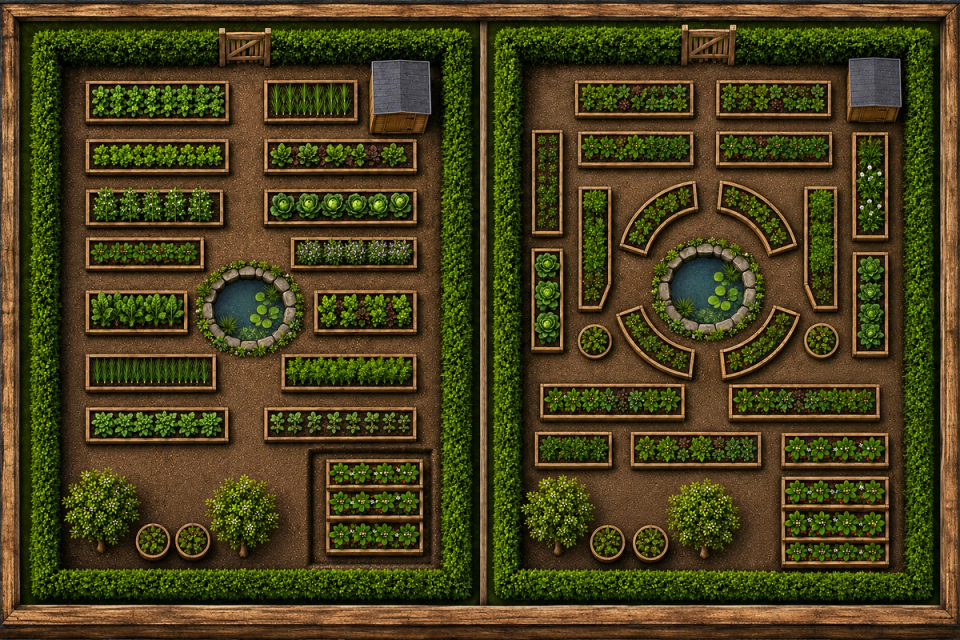
Building the Cottage Ecosystem: Micro-Zones & The Metal Bed Gambit
We knew for a fact that a wildlife pond had to happen; there was no negotiating on that. We needed a permanent haven for frogs, dragonflies, and beneficial insects to help us manage pests organically.
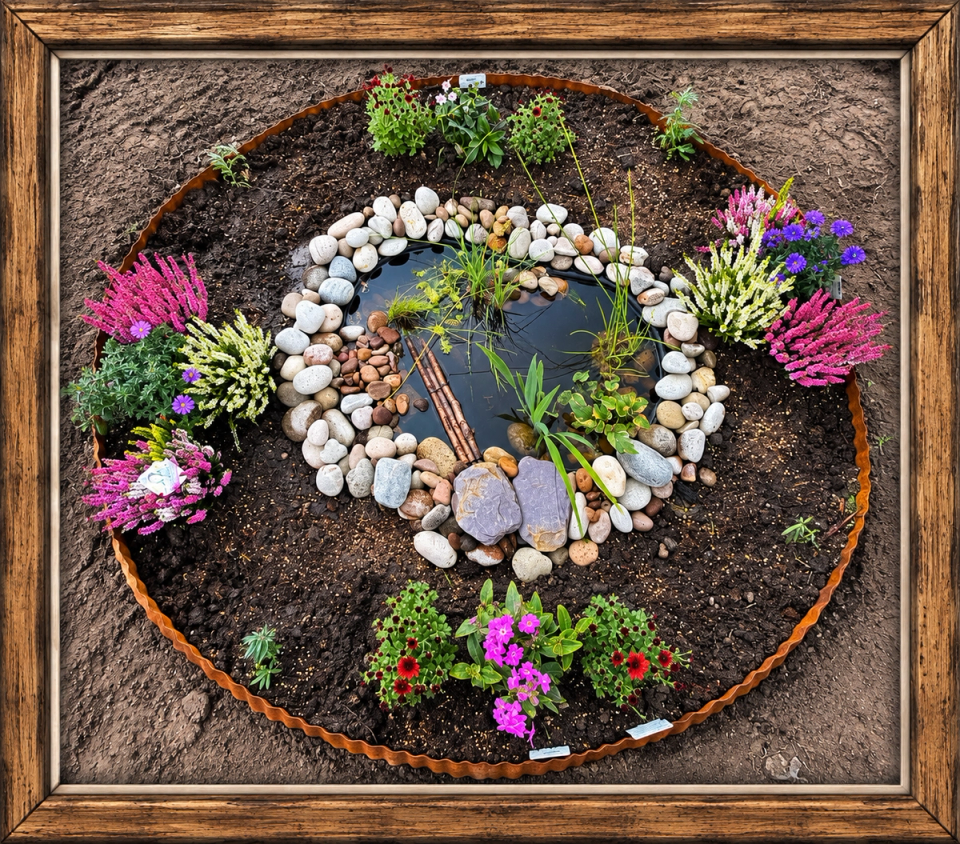
From there, we mapped out dedicated, permanent perennial fruit zones, which gave birth to our favourite new rustic corners: Strawberry Corner, Currant Garden, and Blackberry Creek. We even managed to salvage an old rustic shed to house our hand tools, and lined the borders with bits of character-rich vintage fencing that instantly gave the plot an established, historic feel.
Then came the grand dilemma that every allotment holder faces: How do you actually build the beds?
Daniel and I thought long and hard, looking at a dozen different ways to fill the plot to match the country cottage style I was so longing for. We toyed with the idea of a simple, no-dig setup, and debated traditional timber raised beds. But neither path was simple. Timber raised beds cost a serious amount of money. And if you try to build them yourself out of cheap wood, you quickly realise the hidden catch: wood rots. Within a few damp British winters, you have to tear them out and replace them. Worse, decaying timber attracts wood-boring insects and root-destroying pests right to the base of your crops.
So, we cast our eyes over the avenue. A few of our plot neighbours had installed modern, corrugated metal raised beds, and they looked clean, durable, and brilliant. We took the plunge and ordered a fleet of them.
Then, the panic set in. We entered the ultimate game of Allotment Tetris.
THE METAL BED PUZZLE
- The Dilemma: How do you make modular, sharp metal frames blend into
a soft, whimsical country cottage aesthetic? - The Reality Check: Did we actually think this through, or did we rush?
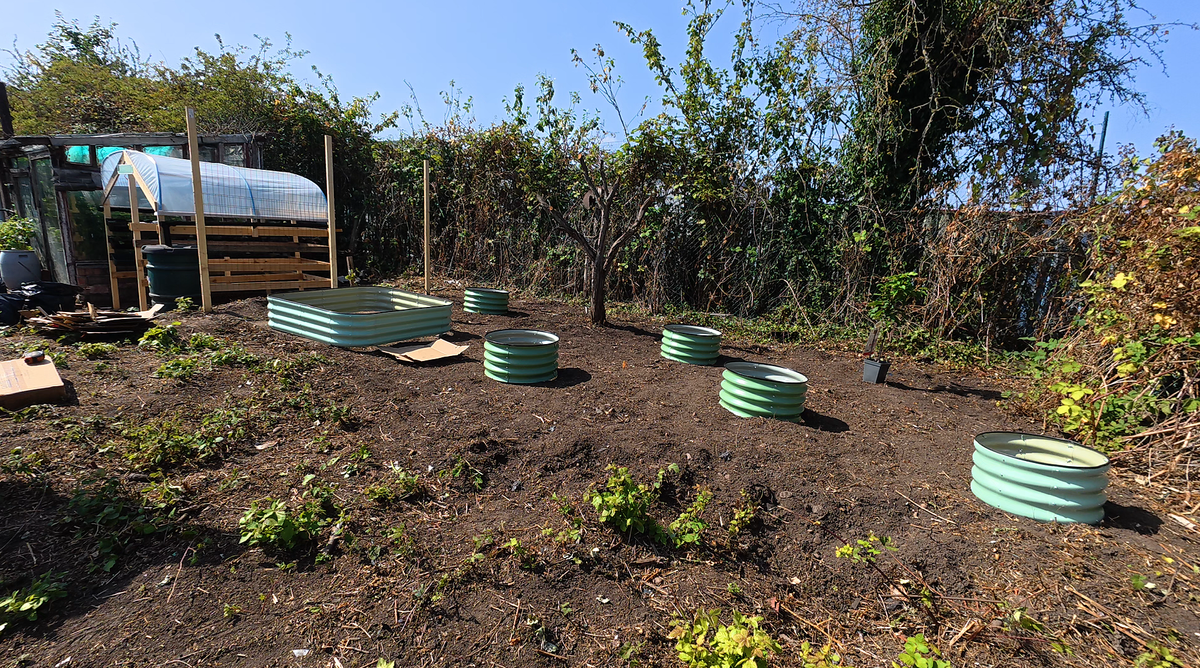
Once the boxes arrived and we assembled them, we realised very quickly that while metal raised beds are infinitely better for durability, you are severely limited in where you can put them. They don't bend around corners, and they demand structural precision. We spent days drawing frantic blueprints on scrap paper, throwing measurements into the master planner, and making physical marks in the ground, only for the plan to completely change the very next morning.
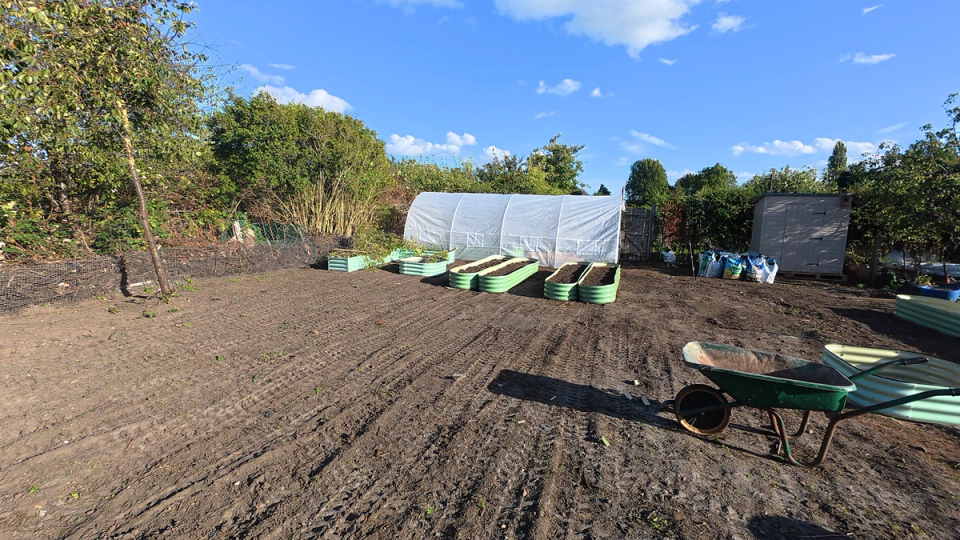
Right now, the beds we have erected are working incredibly well. They are situated in spots where we are genuinely happy with the flow. However, the game of Tetris isn't over: we still have four large metal beds sitting on the path, waiting to find their permanent home.
Bridging the Gap: Bringing AI into the Allotment Vision
It was right in the middle of this stressful layout deadlock, staring down those four unplaced metal frames while trying to mathematically hit our 70% cultivation rule, that we decided to try something a bit different. We brought AI into our allotment planning process to act as a digital co-pilot for our master vision.
THE DIGITAL CO-PILOT PROTOCOL
- The Role: Blending hard agricultural constraints with romantic design notes.
- The Benefit: Instant crop companion pairing, rapid layout brainstorming,
and translating chaotic scrap-paper sketches into clean, structured blueprints.
I'll admit, at first, it felt a bit strange to bring modern technology into a space that is so fundamentally rooted in old-world tradition and heritage. But what we discovered was an incredible bridge between logic and creativity. The AI didn't replace our imagination; it unlocked it.
When my mind was reeling from the heartbreak of losing my purely ornamental Victorian flower layout, we used AI to help us brainstorm how to seamlessly intercrop those vital pollinators, our marigolds, cosmos, and calendula, right into the strict production beds. It helped us sort through the rigid text files of companion planting data in seconds, ensuring we didn't accidentally drop our alliums next to our legumes, and helped us envision the vertical potential of training our prized 'Carman' cucumbers over arch trellises to maximise our ground space.
It took the massive, overwhelming mountain of variables floating around in our heads and gave us an organised sounding board. When we were rewriting plans on scrap paper every single morning, the digital planner was there to help us systematically map out the crop rotation cycles and micro-climates. It has become our modern tool for protecting an ancient way of living, proving that you can absolutely hold onto a whimsical, slow-living country soul while utilising a smart, modern engine to make sure it actually succeeds on the ground.
The Vision Beyond the Cardboard
If there is one thing this planning journey has taught us, it’s that proper allotment design takes time, intense creativity, and long-term vision.
It really isn’t as simple as just throwing down a quick sheet of cardboard, dumping a load of horse manure and commercial compost on top, and calling it a day. Of course, you can do that, and it will grow food, but will you truly be happy when you look down the avenue? Will it feed your soul as well as your kitchen skillet?
True planning requires you to think five steps ahead. You have to calculate your strict four-year crop rotation plans. You have to study companion planting combinations. You have to consider where the trees will cast their shade five years from now, how pollinators will navigate the avenues, whether you can easily get water to the furthest corner, and what will happen in the future when you inevitably want to make a structural change.
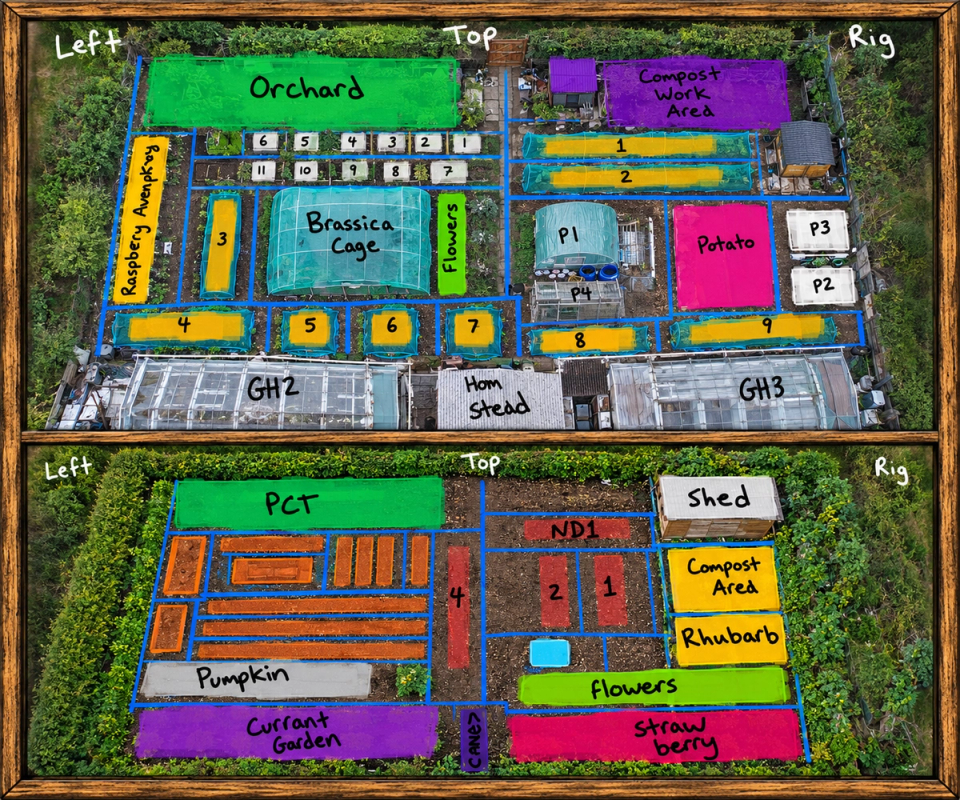
My thoughts on planning a plot are extensive, and the path is filled with revisions, mud, and trial-and-error. But the sheer excitement of finally getting a prized crop safely into the ground, knowing the deliberate, careful thought that went into the soil beneath it, is incomparable to anything else I have ever experienced. Taking the slow, patient time to plan, whether with a muddy pencil or a digital co-pilot, isn't a chore; it is the absolute, crucial component to a happy allotment. The Victorian dream isn't dead on Plot 122; it's just growing inside a beautifully structured, legal, and organic cottage framework, four unplaced metal beds and all.