

The Underground Secret: Hugelkultur inside the Townes & Murray Raised Beds
If you take a stroll down the central avenue of our plot during these golden October days, the allotment looks like a picture of rustic order.
October 2026
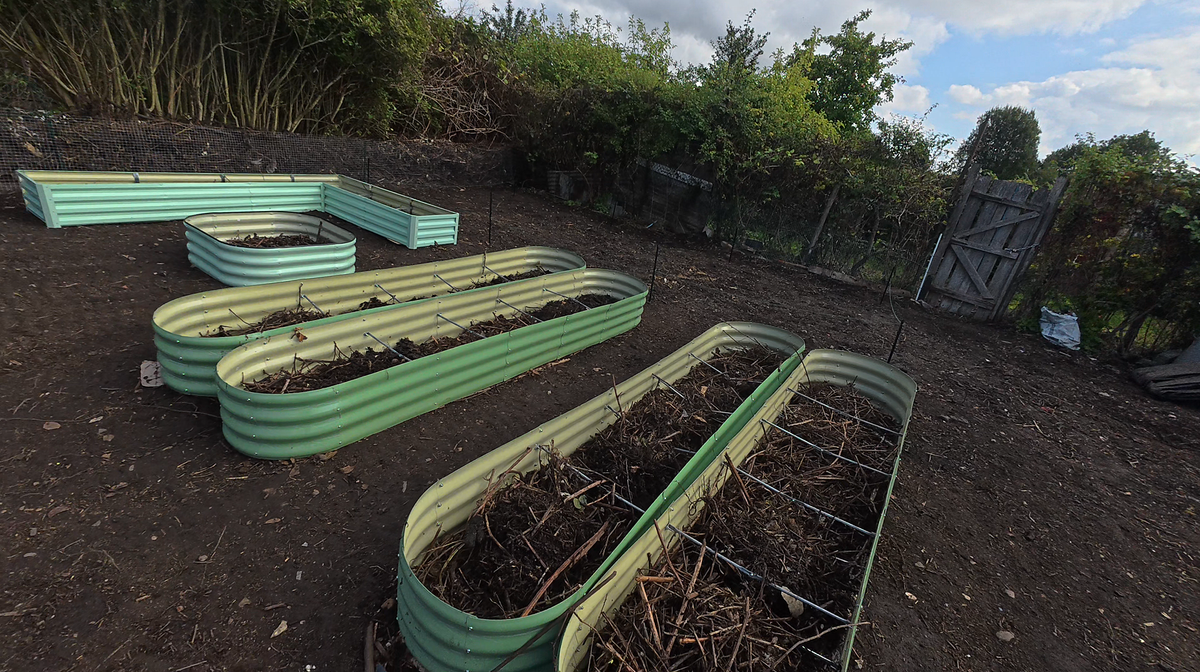
If you take a stroll down the central avenue of our plot during these golden October days, the allotment looks like a picture of rustic order. The pathways are clear, the autumn sun catches the glass of our twin greenhouses, and our timber raised beds sit neatly in their designated segments. But looks can be incredibly deceiving. Beneath the dark, screened topsoil of those raised beds lies a beautiful, hidden secret.
Welcome to the wonderful, ancient world of Hugelkultur.Pronounced Hoo-gul-culture, this traditional German permaculture method translates literally to "hill culture." Traditionally, it involves building massive, freestanding earthen mounds out in the open. But when you are managing a structured 800 square yards of land across Plots 121 and 122, large open mounds don't always fit the aesthetic.
Instead, we decided to adapt this brilliant old-world wizardry to fit our setup perfectly: We brought Hugelkultur inside our raised beds.
It has become our ultimate secret weapon for creating hyper-fertile soil, filling deep timber frames for free, and turning the woody clearing debris from our massive 12-foot bramble blitz into a self-watering, underground goldmine.
The Raised Bed Dilemma (And the Free Solution)
Anyone who has ever built or inherited deep raised beds knows the sudden wave of panic that hits you once the timber frames are secure: How on earth are we going to afford enough compost to fill these massive boxes?
If you fill them with store-bought bags, it will cost you a small fortune. If you fill them with poor-quality subsoil, your crops will struggle. This is exactly where our Master Planner and the Hugel method saved the day.
By lining the bottom half of our deep raised beds with thick branches from our wild border clearings, fresh orchard trimmings, spent summer crops, half-rotted compost leftovers, and layers of beautiful, well-rotted manure, we didn't just save ourselves a massive bill; we built a self-feeding, subterranean ecosystem.
THE RAISED BED HUGEL LAYERING SYSTEM
[Top 20cm] Fine Screened Topsoil & Rich Sowing Compost
[Layer 6] Rich, Sweet Well-Rotted Manure Layer
[Layer 5] Old Crop Waste (Spent Leaves & Stalks)
[Layer 4] Half-Rotted Compost & Dark Leaf Mould
[Layer 3] Upturned Turf Sod & Fine Twig Bundles
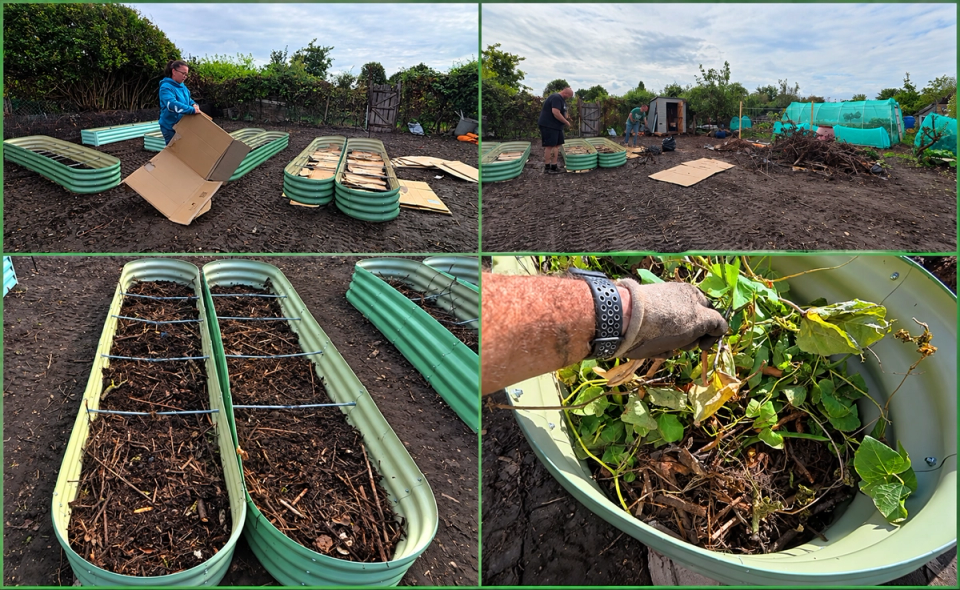
[The Base] Cardboard, Heavy Salvaged Logs, Plum, Damson & Hawthorn
How the Hidden Sponge Works
The magic of burying wood and organic gold beneath your crops is a lesson in long-term soil alchemy. As the heavy timber at the base of our raised beds slowly decays over the next ten to fifteen years, it behaves exactly like a giant underground sponge.
During the damp British winters, the wood absorbs hundreds of gallons of rainwater, locking it deep inside the bed. When the scorching heat of midsummer arrives, the surface soil stays beautifully damp because the roots of our plants can tunnel right down into that damp, decaying timber to drink. It drastically reduces our watering schedule and keeps the plot resilient against drought.
Even better, that thick blanket of well-rotted manure adds a slow-release engine of pure fertility. As the roots grow down, they hit this dark, nutrient-dense layer that provides a constant feed of vital trace elements. And as all this organic matter composts in slow motion beneath the earth, it generates a microscopic amount of ambient heat. This gentle underground warmth keeps the root zones cosy, giving us a head start in early spring and extending our growing season well into autumn.
How We Built It: A Sunday Afternoon Blitz
Bringing this piece of cottage magic to life inside our frames required plenty of muscle, a few blisters, and a steady supply of strong builder's tea at the Homestead basecamp.
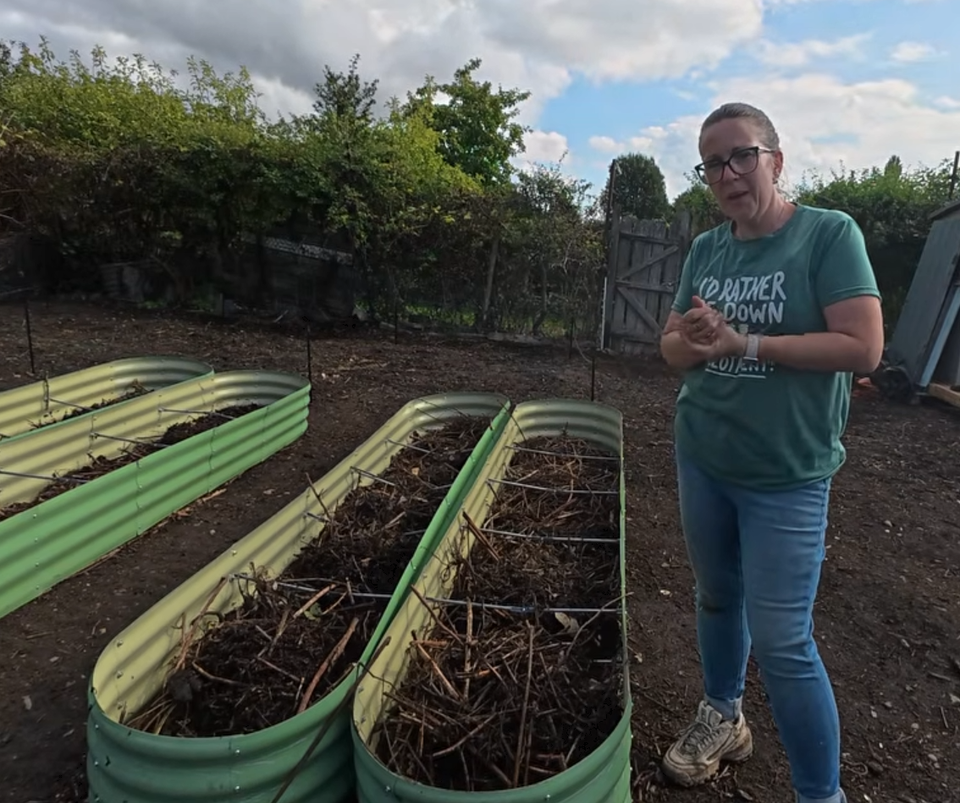
- The Log Fortress: We lined the very bottom of our empty raised beds with the heaviest, thickest logs and old hardwood stumps we salvaged while taming the wild borders of Plot 122. We mixed in structural branches from when we trimmed back the unruly hawthorn hedge, alongside fresh, vital trimmings from our established plum and damson trees.
- The Inverted Sod Layer: To help the wood break down and trap moisture, we flipped our cleared turf grass-side-down right on top of the logs. This creates a brilliant layer of green nitrogen that kickstarts the decomposition process.
- The Compost Sandwich: Next, we hauled over wheelbarrows of the messy, half-rotted bits from the bottom of our active compost heaps—the unrefined stuff full of decomposing vegetable peelings and leaf mould.
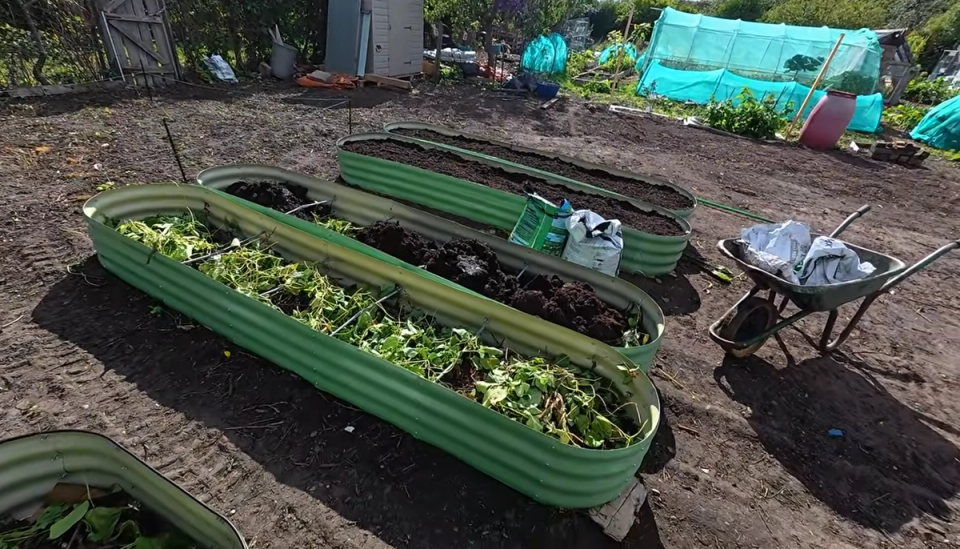
- The Green Crop Layer: We returned our spent seasonal plants directly to the earth. We laid down the leafy remains and fibrous stalks from the old summer crops that had finished their work, packing them in to create a rich green layer.
- The Manure Engine: On top of the crop waste, we laid down a generous, dark layer of beautifully sweet, well-rotted manure. This is where the true growing power lives, creating a fertile buffer zone right below the root line.
- The Capping: Finally, we sealed the beds with a beautiful 20cm layer of our finest, dark topsoil and fully matured sowing compost, leaving a perfectly level, crumbly surface ready for planting.
THE BINDER WARNING LOG
When planning your Hugel beds in your notebook, be incredibly strict
about the timber you bury.
Never use elder, cedar, or walnut wood. Walnut contains a natural
chemical called juglone, which acts as a toxic growth inhibitor to vegetables.
Stick to clean orchard cuttings like our plum or damson wood, and native
hardwoods to keep your soil perfectly safe and thriving!
What We Are Planting in Our Hugel Beds: The Arch & Companion Strategy
Because a freshly built Hugelkultur bed packed with well-rotted manure and spent crop layers is exceptionally rich in nitrogen and organic activity, it is an absolute paradise for our Year 1 Cucurbits. However, this year we are executing a highly strategic, visually stunning double-play in these frames.
THE ALLIUM & ARCHWAY COLLABORATION
Right now in October, these freshly prepared Hugel frames are receiving
our autumn-planted garlic cloves. They will claim the floor of the bed
over winter, setting their strong, deep roots.
When late spring arrives next year, the magic really happens. We are
installing a beautiful arch trellis over the bed, and we will companion plant
our heavy-feeding, prized 'Carman' cucumbers right alongside the garlic.
Instead of letting them scramble across the ground, our 'Carman' cucumbers will be trained to climb vertically up the arch trellis. As the vines scramble skyward over the framework, their heavy, glossy green leaves will form a living, architectural canopy overhead. This sky-high growth saves precious ground space for the garlic below, shields the earth to lock in the Hugel moisture, and keeps the developing cucumbers perfectly clean, straight, and away from ground pests.
Down below, the garlic will act as a natural, aromatic pest guard. The hungry roots of the 'Carman' vines will dive down like magnets into the manure, crop waste, and decaying orchard wood layers, drinking from the deep reservoir to produce the crispest, sweetest cucumbers on the site.
Our Allotment Takeaway
There is a profound, rustic romance to knowing that our neatest raised beds are powered by the wild wilderness we cleared and the ghosts of last season's harvest. The very same thick, stubborn hawthorn branches that tore our clothes, alongside the trimmings of our plum and damson trees, are now buried deep in the earth, quietly transforming alongside our old crop stalks and manure into the richest soil we have ever laid eyes on.
It is sustainable, circular gardening at its absolute best. Nothing is wasted, the soil is respected, and the legacy of our grandads’ hands-on wisdom lives on beneath every single seed we sow.